
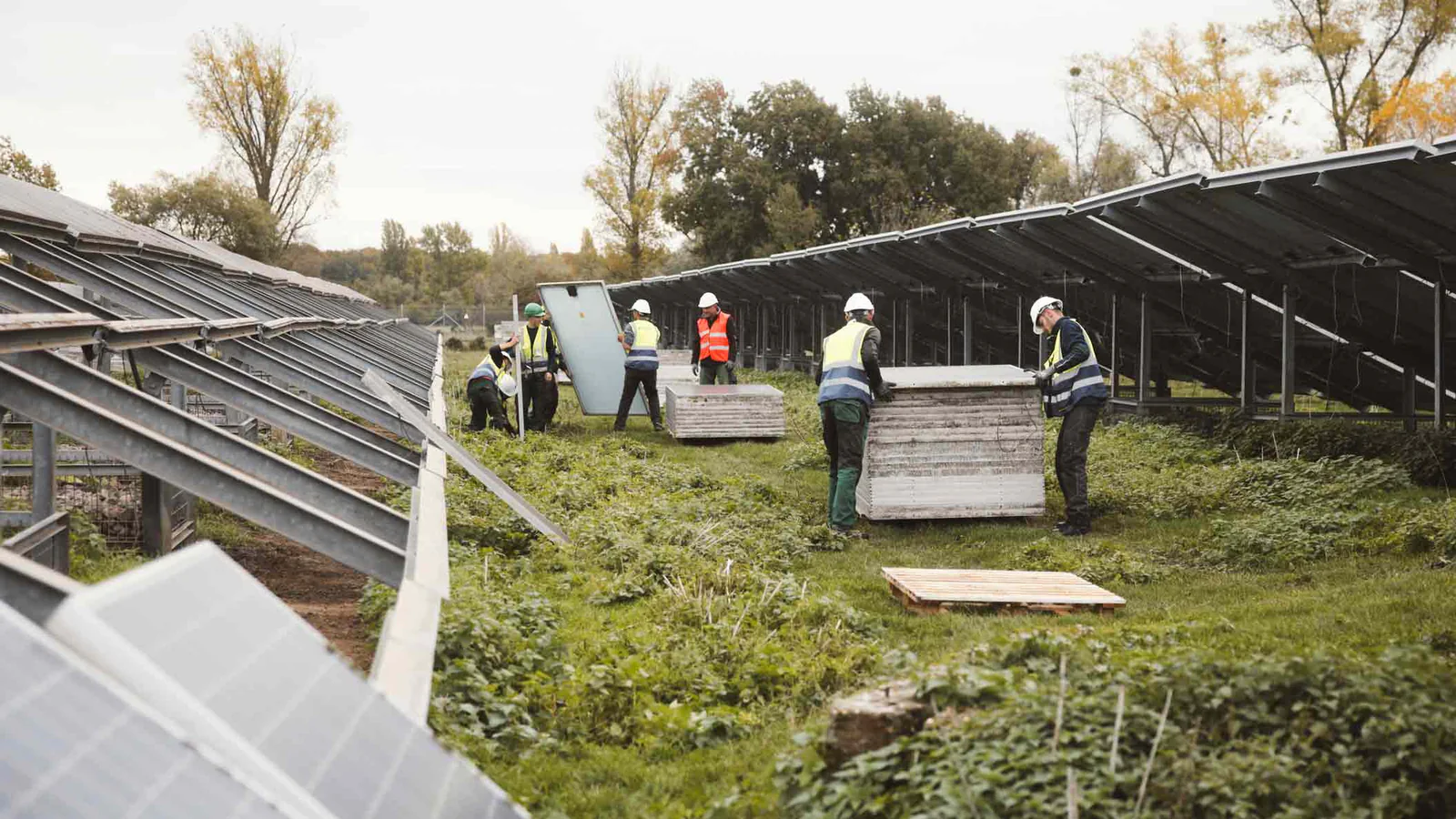
Renewing a solar park with several thousand modules brings ageing equipment, heavy structures and established cable systems into a tight programme. PVMRC managed the complete decommissioning for this project. Six weeks had been scheduled, and the team handed the cleared site over ahead of plan. This report explains the decisions that made the work safe, traceable and commercially manageable.
Starting point: a solar park entering its next lifecycle
The site was not simply being closed; it had to be prepared for a defined next use. It contained several thousand photovoltaic modules, extensive steel mounting structures, DC cabling, technical equipment and a substantial transformer station. Some infrastructure had to be removed, while other parts could remain after technical review. The assignment was therefore a decommissioning, sorting, logistics and handover project at the same time.
The main challenge was the dependency between work packages. Follow-on teams could not work freely while modules and cables remained in the field. Transport could not be planned reliably before materials were separated. The project therefore began by defining the required final condition with the owner.
Site survey and decommissioning method
Before mobilisation, the team reviewed module fields, mounting systems, cable routes, inverter areas, the transformer station, access and possible temporary storage. Data such as module count, frame size and pallet format influence labour, packaging and vehicle planning. Sensitive areas, ground conditions and approved machine routes were also recorded.
The survey became a practical sequence: electrical isolation, organised module removal, cable separation, technical equipment, mounting-system work and final inspection. The method gave all parties a common baseline and could be adapted to weather, actual quantities and site progress without weakening safety or quality.
Safety, responsibilities and releases
A solar park remains a technical installation during decommissioning. Electrical hazards, sharp frames, broken glass, heavy parts and machinery need a coordinated system of work. Responsibilities must be explicit: who confirms isolation, releases an area, records an exception and decides how damaged equipment is handled?
Briefings covered vehicle movements, changing weather, broken panels and undocumented cables as well as personal protective equipment. Clear reporting routes allowed the team to work efficiently without treating speed as a substitute for control.
Systematic removal of PV modules
Modules were released row by row, moved safely out of the tables and assigned directly to their intended material stream. A balanced workflow is more effective than opening many work fronts at once. Removal, internal transport, visual checking and palletising remain aligned, and the site does not fill with unsecured individual panels.
Damaged items, unusual batches and different module formats were recorded separately. Serviceable modules require different handling from broken or technically unsuitable units. Making that distinction at removal reduces later re-sorting, unnecessary transport and the mixing of recovery routes.
Mounting systems, cables and technical equipment
Cables, connectors and other electrical components followed the module work. Copper-bearing cable, aluminium profiles, steel and mixed assemblies were collected separately. The mounting structure was not removed indiscriminately: where its condition, structural assessment and the new design allowed, it could remain for the next phase.
The transformer station required its own method. Weight, connection status, lifting points, access and recipient needed confirmation before removal. Integrating the work into the master programme prevented it from becoming an unresolved item at the end.
Reuse, recycling and defined material routes
Professional decommissioning does not end when the last fastener is removed. Every significant material group needs a next destination. Technically suitable components may be candidates for reuse after assessment. Unsuitable modules and other materials are prepared for the relevant treatment or recycling route according to type and condition.
Age alone does not make a module reusable, and it does not automatically make it waste. Condition, electrical safety, performance information, provenance, documentation and intended use all matter. PVMRC therefore connects dismantling and sorting decisions with downstream logistics.
Packaging, temporary storage and outbound logistics
Photovoltaic modules are large, heavy and vulnerable to breakage. Suitable pallets, edge protection, strapping, labels and stable load units protect people, products and vehicles. Damaged modules may need additional containment. Stack height and unit weight must fit the vehicle, handling equipment and receiving site.
Transport was derived from project output rather than booked ad hoc. Loading began when defined quantities were sorted and ready. This kept internal routes clear, reduced waiting time and made each handover traceable by quantity, load unit and recipient.
Working on soft and sensitive ground
The land had previously been used for grazing and included soft, uneven sections. Unplanned heavy traffic could have caused deep ruts, compaction and delay. Machine routes, turning areas and storage zones were chosen deliberately, and operations were adjusted in poor conditions rather than creating restoration work.
Buried cables and differences between drawings and the as-built condition also demanded care. When the site did not match the documents, the team checked the area and revised the sequence. The method provides direction, while site observation determines safe execution.
Programme control without sacrificing quality
Six weeks were available. Progress was not measured only by the number of modules removed. Completed work areas, fully sorted quantities, transport-ready units and released handover zones gave a more accurate view of whether any step could delay the overall programme.
Coordinated crews and a clear material logic allowed the site to be handed over ahead of plan. The improvement came from reducing waiting time between dismantling, sorting, machine work and collection. Fast decommissioning is the result of a stable process, not uncontrolled urgency.
Documentation and final site handover
The close-out package included quantity records, documented transfers, information on retained or reusable components and evidence for the selected recovery routes. Photographs and acceptance records made the condition of specific areas transparent. The owner received a coherent project file rather than unrelated delivery tickets.
The site was organised, cleared of obsolete equipment and ready for the next construction stage. Remaining observations were captured in a close-out list instead of being passed on verbally.
What asset owners can take from this project
A dependable project starts with four questions: what final condition is required, which components are to remain or be assessed, which downstream routes are available, and what evidence is needed for acceptance or audit? Answering these before mobilisation reduces expensive decisions under programme pressure.
Useful inputs include a current site plan, module and equipment data, approximate quantities, access photographs, the required completion date and intended next use. PVMRC can then structure dismantling, machinery, packaging, logistics and documented handover.
Frequently asked questions
How early should planning start? For large assets, preferably several months before mobilisation. How long does decommissioning take? Capacity alone is not enough; system design, terrain, material routes and final condition all affect duration.
Can mounting structures remain? They can where technical assessment, contracts, permits and the replacement design support it. Can all panels be reused? No. Reuse depends on suitable condition, reliable information and a safe application. Defective units need a controlled treatment route.
Planning a similar project?
We will assess requirements, quantities and practical next steps with you.
Project request