Photovoltaic assets pass through more stages than development, construction and operation. As equipment ages, owners face questions about performance, damage, spare parts, repowering, dismantling, transport and recycling. Owners, EPCs, O&M providers, asset managers and manufacturers therefore benefit from a partner who treats site work, material flows and evidence as one connected process. This guide explains PVMRC's service portfolio, the interfaces between its six core services and the most practical starting point for a specific PV project.
Why PV projects need an integrated service chain
At the end of operating life or during a major upgrade, many tasks depend on one another. Asset condition, objectives and technical limits need to be understood before removal. Dismantling creates material streams that must be sorted, packed and transported. Serviceable equipment follows a different route from broken or uneconomic modules, and the final project file must connect quantities, transfers and treatment evidence.
Separating every package can leave the owner managing all interfaces. Missing pallets delay crews, uncoordinated collections block access and unclear acceptance criteria create expensive re-sorting. PVMRC therefore connects PV decommissioning, repowering, PV logistics and module recycling. Thermography and valuation provide the evidence needed before implementation.
Who the service portfolio supports
PVMRC works with solar park and commercial rooftop owners, independent power producers, utilities, EPC contractors, technical operators, O&M providers, asset managers, investors, manufacturers and take-back schemes. Each role has different priorities: owners want controlled downtime, EPCs need dependable delivery capacity, asset managers need clear data and manufacturers need practical return and recovery routes.
The services can be commissioned as individual packages or combined into an end-to-end project. An owner may require only a thermal inspection. A repowering project can combine module removal, installation, sorting, logistics and recycling. In both cases, scope boundaries, responsibilities and required close-out evidence need to be agreed before mobilisation.
The right starting point: define asset, objective and programme
Initial information normally includes location, asset type, installed capacity, module count, manufacturer and model, commissioning year, known damage, drawings, photographs, access and required completion date. The objective is equally important: continued operation, partial renewal, full repowering, sale or complete removal. Material routes and commercial assumptions cannot be planned reliably without that objective.
Not every input must be complete at first contact. PVMRC can identify missing information and structure the next checks. A site survey is useful for complex utility-scale or constrained rooftop assets. It verifies whether records match reality, which machinery can operate and where safe storage and loading areas can be established.
1. PV decommissioning: safe, systematic and documented
Photovoltaic decommissioning covers more than module removal. The scope may include cabling, string boxes, inverters, transformers, mounting systems, trackers, foundations, concrete blocks, fencing and site-specific structures. The agreed final condition, intended next use and technical and contractual constraints determine what remains and what is removed.
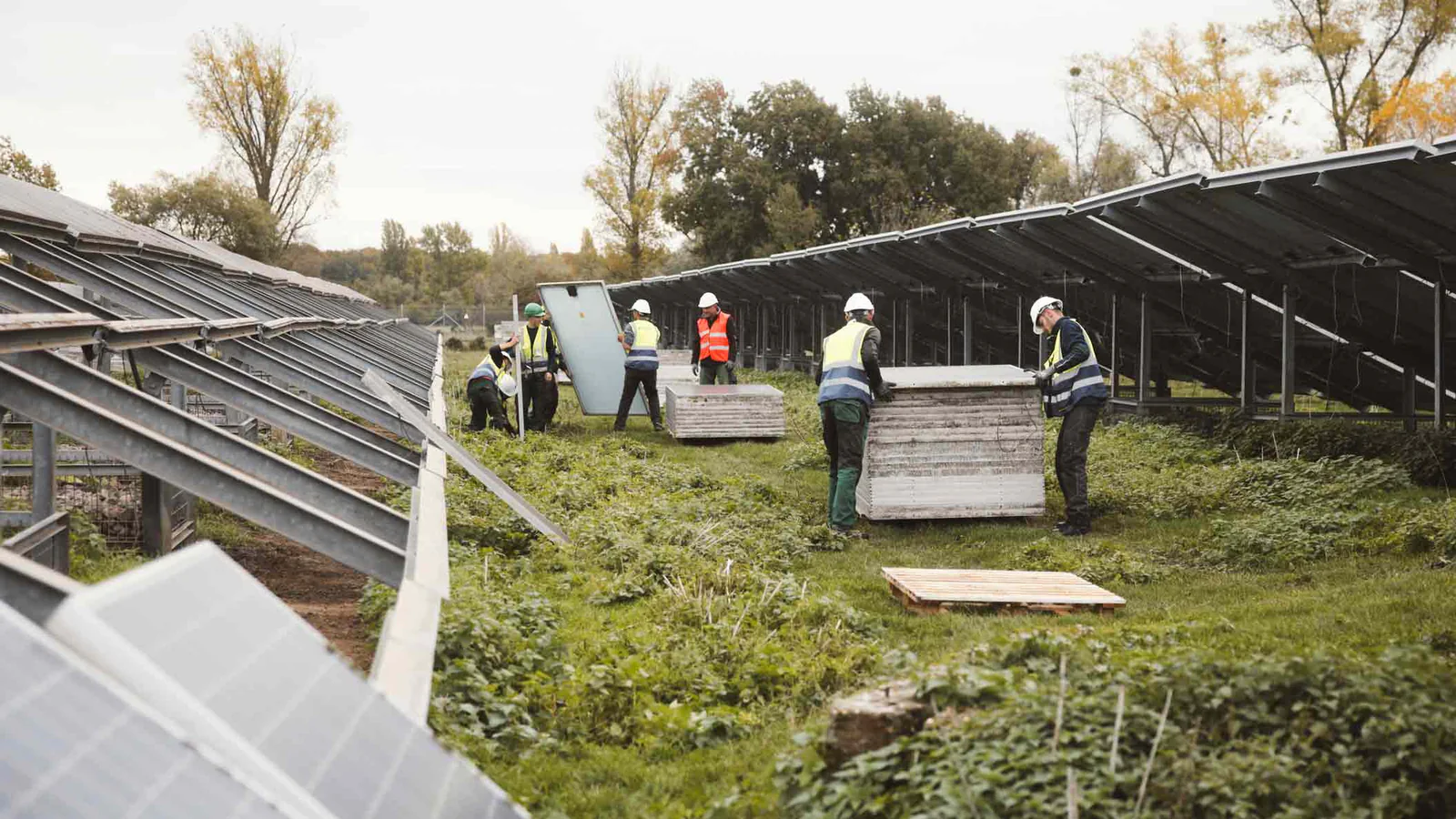
PVMRC plans crews, equipment, safety zones, work sequence and internal material routes as one system. Modules are removed in a controlled process, sorted by condition and secured for transport. Metals, cables and technical equipment are separated. Sectional handover can release completed areas to follow-on contractors, while close-out records connect quantities, transfers and the final project status.
2. Repowering: more output and a new commercial perspective
PV repowering replaces ageing or underperforming equipment with modern technology. The objective may be higher capacity, improved yield, longer remaining life or more dependable operation. Grid connection, mounting systems, land use, module dimensions, inverters, permits and route to market influence whether the business case works.
Based on the owner's or EPC's technical plan, PVMRC can deliver operational packages: remove existing modules, install replacements to the agreed specification, sort removed equipment and coordinate downstream routes. Suitable modules may be considered for reuse after appropriate assessment; unsuitable units move to controlled recycling. Connecting removal, installation and logistics reduces downtime and unnecessary handling.
3. Logistics and disposal coordination: make every movement predictable
PV modules are large, heavy and vulnerable to breakage. PV logistics therefore starts on site. Pallet format, stack height, edge protection, strapping, labelling and load securing must match module condition, vehicle and receiving facility. Damaged modules may require additional containment.
PVMRC coordinates palletising, loading, domestic and cross-border transport, temporary storage where needed and transfer to suitable recipients. Collections are aligned with actual production so that access and work zones remain clear. Weight, load, transport and handover records create traceability. Classification, documents and permitted routes require early checking on international projects, although project-specific legal advice may still be needed.
4. PV module recycling: recover materials and document compliance
Not every removed module is suitable for further use. Broken glass, electrical defects, delamination, fire damage, missing data or disproportionate testing cost may require recycling. In PV module recycling, modules are collected, sorted by technology and condition, mechanically pre-treated and directed to suitable material recovery processes.
Crystalline-silicon panels contain mainly glass and aluminium, along with silicon, copper, silver and other materials. High-quality recovery depends on clean streams and appropriate processing. PVMRC connects collection, traceable transport, sorting, processing and evidence. Recycling capability at the Altenstadt site is being developed further in 2026. Official evidence and audit-ready reporting can support authorities, compliance, take-back schemes and ESG records.
5. Thermal drone inspection: understand performance before deciding
Underperformance does not automatically justify replacement or dismantling. A thermal drone inspection can identify hotspots, string outages, cell damage and other thermal anomalies across large ground-mounted or rooftop assets. Contactless capture covers wide areas efficiently without inspecting every table on foot.
The process includes flight planning, safe capture, thermal and visual imagery, evaluation, GPS-based localisation and clear reporting. O&M teams can prioritise maintenance, while owners gain evidence for investment decisions: which areas can remain in operation, where replacement is justified and which findings require closer investigation before a sale, repowering or valuation.
6. Free solar park valuation: compare options on one evidence base
Many ageing assets retain technical and commercial value. A free initial solar park valuation considers location, age, capacity, modules, inverters, yield, known defects, remaining life and market context. It provides a first orientation for continued operation, sale, repowering or decommissioning.
The assessment is not a formal technical due diligence, valuation report or legal opinion. It helps order the available routes and identify the next useful data or inspection. Complete monitoring, equipment schedules and technical records improve confidence. Where sufficient information is available, PVMRC aims to provide a prompt and transparent first assessment before discussing practical next steps.
How the six services connect in a real project
A repowering project may begin with condition analysis or thermography, followed by a comparison of commercial options and final technical planning by the owner or EPC. PVMRC then prepares crews, equipment, packaging and logistics. During delivery, modules are removed and assigned directly to reuse assessment or recycling, while new modules arrive in line with the construction sequence.
A complete decommissioning places more emphasis on final site condition, separated material flows, handover and evidence. A recycling-only project focuses on acceptance criteria, packaging, transport and documented treatment. The modular model supports both: one clearly defined package or a coordinated solution with a central point of contact.
Project delivery from enquiry to close-out
Following an enquiry, PVMRC reviews objectives, available data, location, quantities and programme. Depending on complexity, the next steps can include a survey, quantity baseline, scope matrix, safety and logistics method, and proposed material routes. Offers and schedules should expose assumptions, options and responsibilities so changed quantities are managed rather than debated during delivery.
Execution records progress, sorted quantities, transport-ready units and transfers. Exceptions are documented and agreed. The close-out file combines relevant photographs, quantities, transport and handover information, and available recovery or disposal evidence. This produces a coherent project record instead of unrelated documents.
Documentation, compliance and traceability
Owners and project partners need evidence for acceptance, internal approval, insurers, authorities, finance, sustainability reporting or producer responsibility. Exact requirements depend on country, role, material status and contract. A consistent link between removed quantity, load unit, carrier, recipient and treatment is particularly valuable.
PVMRC considers WEEE, the German Electrical and Electronic Equipment Act and other applicable national requirements in the project context. Cross-border movements and the distinction between used equipment and waste can be complex, so critical cases are checked before shipping and coordinated with suitable specialists. Transparent evidence supports compliance while improving cost control and planning across asset portfolios.
Which service fits which situation?
Thermography is often the right first step when performance loss is unexplained. A valuation helps prioritise options when technical and commercial routes remain open. Repowering provides the project framework once module replacement has been selected. A decommissioning concept is required for complete closure or a new land use. Logistics becomes a dedicated package when volume, multiple recipients, storage or international routes need coordination.
Recycling is appropriate for modules that cannot be reused safely or economically, but the answer is often a combination of services. Early contact prevents packaging, storage and recipients being selected only after removal. The PVMRC project form brings location, scope, quantities and available records together for an initial review.
Frequently asked questions about PVMRC services
Must a project use all six services? No. Services can be commissioned separately or combined. Does PVMRC work only in Germany? PVMRC supports projects across Europe, subject to site-specific review. Are only utility-scale solar parks suitable? The main focus is commercial rooftops, ground-mounted assets and larger module volumes, but scope depends on the case.
Who decides between reuse and recycling? Condition, electrical safety, performance data, provenance, documentation, demand and legal status all matter. How early should PVMRC be involved? Before removal or replacement, and preferably several months ahead for large projects. What information is enough for an initial review? Location, photographs, approximate module count, make or model, condition, capacity, required service and timing are a strong starting point.
Planning a similar project?
We will assess requirements, quantities and practical next steps with you.
Project request